

From 'Passions of the Cut Sleeve' to LGBT Censorship: How China 'Learned' Homophobia

Updated: Nov 1, 2023
Written by Marcus Lu
Edited by Evey Firth and Jiansheng Zhang
Design by Xavier Foo

1. Homosexuality in Imperial and Modern China
China is known for its conservative attitude towards homosexuality, evident in the recent efforts of social media platforms Sina Weibo and WeChat to remove homosexual content; the latter being successful. In China, there is a prevalent culture of "don't ask, don't tell" around homosexuality. The pride flag is not widely recognised, and references to LGBT individuals are often censored in the media and omitted from education. Additionally, only 18% of gay men come out to their families, and a large majority (80-90%) of Chinese gay men are married to women. Whilst China hosts the world's largest lesbian, gay, bisexual and transgender (LGBT) community, this remains largely invisible to the wider society. The government itself offers little to no acknowledgement of or concessions to the allowance of “non-traditional lifestyles.”
Unsurprisingly, my early education in China had conveniently left out anything remotely related to homosexuality. For this reason, the video “China's Most Bisexual Dynasty - Han Emperors and Their Male Favourites” caught my eye. I was surprised to learn that many emperors of the Han Dynasty (206 B.C. - 220 A.D.) had well-documented male favourites.
The most notable of these was Dong Xian, who, on one fine afternoon, was sleeping on the same straw mat as Emperor Ai. The emperor's sleeve had wound up underneath the resting Dong Xian. So, of course, Ai cut off his sleeve to avoid disturbing his lover. This was more than an isolated example of an Emperor’s preferences, because after this romantic occurrence, “cutting the sleeve” became a fashion among the nobility in imitation of the emperor—which indicates a clear lack of discrimination against Ai and Dong's relationship despite its homosexual nature.

This apparent acceptance of homosexuality was reflected not only in legendary love stories but also in literature, historical records and laws and court cases. When laws against homosexual activity first appeared during the Ming Dynasty (1368–1644), only the penetrator was punished, and not for breaking a moral standard of heterosexuality, but for degrading the masculinity of another man. In fact, it was grouped with assault and fighting rather than sexual offences. Further, during the Qing dynasty, court cases suggest that social attitudes towards same-sex relationships were not inherently hostile and that a man who took on a penetrating role in such a relationship was even seen as something to be flaunted.
Some academics have argued that punishments for gay men in the Ming and Qing dynasties were a precedent of growing homophobia in China, which developed into what we have today. However, a closer look reveals that in late imperial China, social attitudes mainly centred on the shame of the penetrated male, not the supposed sin of homosexuality itself.
Naturally, this begs the question: how did modern homophobia take root in China? How did being gay itself become stigmatised?
2. The Century of Humiliation
The period from 1849 to 1949 is known as the “Century of Humiliation” in China, during which Western powers and Japan encroached on China's sovereignty, resulting in a series of unequal treaties that ceded land, money, and political power to foreign nations. This led to internal political turmoil and a degradation of international status for China. By the early 1900s, multiple Western nations, as well as Japan, held land in China in the form of concessions or colonies. The Qing government's attempts to resist these foreign powers, such as the Opium Wars, were unsuccessful, and the Boxer Rebellion resulted in further humiliation and the stationing of foreign troops in strategic positions within China.
It was becoming clearer, especially to Chinese intellectuals and educated youth (such as those in Peking University) that the West was far more advanced than Imperial China: they had scientific frameworks and superior technologies and were able to crush Chinese forces that were tenfold in number. To these young, educated, and radical individuals, the West appeared to be all but a superior civilization in contrast to China, a sickly, weak nation on the brink of death.

In the early 20th century, these people gathered in what was known as the “New Culture Movement” (新文化运动). At its core, the New Culture Movement revolved around the belief that China’s own system of knowledge failed. To save the nation, they needed to create a new system, a new ‘canon’ of sorts, based on the induction of Western knowledge and values. This looked like university students carrying banners of “Mr Democracy and Mr Science” (德先生和赛先生) on May 4th 1919 in the famous anti-imperialist May Fourth protests. Peking University professors, Qian Xuantong and Cai Yuanpei advocated for the abolition of Chinese characters in favour of English and Esperanto and looked to the West as the ultimate authority.
What happened next was natural. Professor of History of Gender and Sexuality in China, Wenqing Kang put it best in his book Obsession: Male Same-Sex Relations in China, 1900-1950:
“[This] modernising project of Chinese nation-state building involved a reconfiguration of indigenous knowledge about male same-sex relations and contestation of the meaning of sex between men.”
3. Importing Homophobia
The New Culture intellectuals wanted to import Western knowledge to save China. But why, of all things, was homophobia relevant? How did sex and homosexuality become part of the New Culture discourse? Most importantly, how did this change the Chinese discourse around homosexuality?
Firstly, homophobia was cleverly cloaked in the guise of science. Backed with academic papers and fancy-sounding phonetically translated names of white men, the idea that being gay is a disease was articulated exactly the way the New Culture movement most eagerly lapped up.
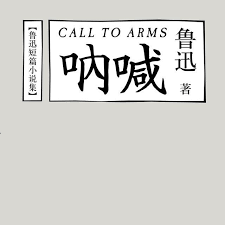
Secondly, there was a belief, especially among the iconoclast radicals of the New Culture movement, that the Chinese spirit was corrupt and weak. The phrase “东亚病夫” or “sick man of East Asia” was internalised by New Culture. The New Culture author Lu Xun famously titled one of his novels "呐喊" or "Call to Arms" to represent his desire to wake the Chinese people from their perceived slumbering weakness. Unfortunately, homosexuals became the perfect victim of the New Culture’s quest to eliminate “Chinese weakness.” At the time, Western “scientists” characterised gay people as diseased. Therefore, to some New Culture intellectuals, it was a natural conclusion that to eliminate the weakness of China, they needed to purge homosexuality.
Thirdly, there is the belief that “国之将亡,必有妖孽”, or “as a nation dies, the unnatural must appear”. The pathologization of homosexuality in Western sexology thus ties it to the perilous state of the nation, since it is deemed unnatural. This, again, made the West’s conception of homosexuality important to the New Culture movement.
4. Implications for Chinese Society
We have established that the New Culture movement imported Western homophobia into China. But why was it able to impact the wider society?
The clearest point is the influence of the New Culture movement on the Republican Government in power during the first half of the 1900s. Supporters of this movement were often highly educated. Furthermore, they pointed towards a possible solution to China’s problems in the 1900s and used nationalism to their advantage. Therefore, these people and their ideas were well respected in society. So when they flooded the streets and opinion columns demanding westernisation, the Republican Government could hardly ignore them.
It is quite intuitive why this was bad for homosexuals in the early 20th century. For the Republic to westernise, it must imitate a very homophobic Europe and U.S.A. It is no surprise then, that the intolerance of gays and lesbians became more mainstream through the Westernisation efforts of the early Republic of China.
Another factor of note is New Culture’s dominance in literature. By labelling other literary schools as traditional and backward, New Culture writers took a strong position in literature. This meant that the ideas they import, such as Western sexology, would have a strong platform in writing and public discourse.
One example of how this happened is the change in the Chinese phrase for homosexuality.
In Chapter 1 of Obsession, Kang explains that new Chinese phrases were being created for homosexuality. Whereas the old phrases were generally allusions to famous homosexuals (e.g. 断袖癖, lit. passion of the cut sleeve, in reference to Dong Xian), the new phrase (同性恋爱, lit. love between those of the same gender) was much more scientific and in line with the Western phrase ‘homosexual’. Clearly, the introduction of this new phrase was part of the larger reconfiguration of Chinese knowledge with the West as its guide.
Alarmingly though, the introduction of this Western-sounding phrase for homosexuality was also accompanied by the introduction of the Western conception of homosexuality, i.e. being gay is a disease. This could be seen in a 1933 article in Shanghai Tidbits:
“In short, mutual attraction between men and women is very common, while 同性恋爱 (homosexuality), between men or between women, is simply sexual perversion.”
This article aimed to explain the new phrase ‘同性恋爱’, as translated from ‘homosexuality’. However, by fusing these conceptions, Western homophobia in the form of sexology has been imported into the Chinese discourse.
Another example of New Culture literature’s influence on public discourse was what Kang called the heterosexualisation of the Peking Opera. In the late Qing dynasty, there was a norm of praising the sometimes homoerotic relationship between dan actors and male patrons in the Peking Opera. However, literary criticism from New Culture associates like the Beijing Orthodox Patriotic Newspaper, Lu Xun, and Ba Jin completely flipped this norm, and by 1940, this relationship was completely expunged from public discourse.
Westernisation, brought about by the New Culture movement, reshaped the Chinese view of homosexuality in profound ways. During decades of Republican rule, the homophobia of the West changed China’s public discourse as well as government policies, resulting in it seeing homosexuality through a pathologizing and criminalising lens.

5. Conclusion
It is obvious that modern Chinese conservatism toward gay people matches the characteristics of Western homophobia, but this is not something shared by ancient China. I have shown that New Culture and Westernisation in the early 20th Century was the entry point for these new, Western ideas and that they substantially changed China’s knowledge structure through government policies and literature alike. There is still a gap to fill between this point and the early 21st century—and a wide one to be sure, seeing to China’s tumultuous second half of the 20th century—but we can come to a general understanding of the emergence of Chinese homophobia as we now know it now.
A last word though. In partial defence of New Culture intellectuals: They were born to a nation plagued by internal schisms, backwardness, and semi-colonialism. They had not seen Western ideas and structures fail like we have, with the benefit of hindsight, and they certainly are not should not be considered the antagonists here.
They are more like clumsy protagonists who have created some side quests for posterity in their haste to save their dying world.
Hopefully, those side quests are not too difficult, and use arrow keys instead of WASD.
Bibliography
Anonymous. “Homosexuality in China.” Wikipedia. Wikimedia Foundation, Dec 5, 2022. https://en.wikipedia.org/wiki/Homosexuality_in_China. (Jan 11, 2023).
Anonymous. “LGBT Rights in China.” Wikipedia. Wikimedia Foundation, Dec 19, 2022. (Jan 11, 2023).
Colville, Alex. “China's Gay Emperor Known for His 'Cut Sleeve'.” The China Project. Apr 19, 2021. https://thechinaproject.com/2021/04/19/chinas-gay-emperor-known-for-his-cut-sleeve (Jan 11, 2023).
Kang, Wenqing. Obsession: Male Same-Sex Relations in China, 1900-1950. Hong Kong: Hong Kong University Press, 2009.
Liu, Lydia. Translingual Practice: Literature, National Culture, and Translated Modernity – China, 1900-1937. Redwood City: Stanford University Press, 1995.
Sommer, Matthew. “The Penetrated Male in Late Imperial China: Judicial Constructions and Social Stigma.” Modern China Vol. 23, No. 2. (1997): 140-180.
Wang, Yuanyuan et al. “Mapping out a spectrum of the Chinese public’s discrimination toward the LGBT community: results from a national survey.” BMC Public Health. May 12, 2020. https://bmcpublichealth.biomedcentral.com/articles/10.1186/s12889-020-08834-y. (Mar 14, 2023).
Zhang, April. “Qian Xuantong - Let's Abolish the Chinese Writing System!” MSL Master. Dec 23, 2022. https://www.mslmaster.com/index.php/msl-master-news/item /qian-xuantong-let-s- abolish-the-chinese-writing-system. (Jan 11, 2023).


Comments